Friday, August 5, 2011

This Week In Favs……….

10) “On Distractions” by Nathan Bransford. “You can’t write if you don’t live.” <—This is some of the *best* writing advice I’ve ever heard! As writers, we set schedules for our writing so as to ensure we’re writing everyday to get something on the page – myself included. But Nathan’s post runs right along with the schedule I set forth for myself last week in taking 30 minutes during the work week to write while using the other free-time to spend time with my hubby, sister, work-out, and/or read. My weekends have a bit more time allotted for writing, but I still carve out time to spend with my friends who are always a source of inspiration for me. Okay, so yes, when we’re deep in the writing we want to grab onto it while the Muse is singin’ loud and proud, but what happens after the Muse’s song is over? LIFE!!! That’s what happens. A chance to recharge your battery so you can come back to your Muse when they’re ready, bright-eyed and bushy-tailed and recharged to take down the next part of the story.

9) “How to Be a Better Writer: Today” by Angela Kulig at Angela WRITE Now. This is a new series by Angela that focuses on how you can be a better writer TODAY – or as Angela put it: “…how you can be more gooder!” :0) Angela left us with five points on how you can make yourself a better writer and each one holds a nugget of truth on what we as writers should do. My fav? #2 ‘Learn a new word that means the same thing as another word you already use too much.’ I’ve been trying to use different words in my WIP lately. Thesaurus.com has become my best friend. This even made me start thinking about how I use the word ‘awesome’ too much in my daily life and don’t realize until the hubs says something. My new word to replace that one? ‘Stupendous’! <—I can’t take credit for finding it though…he did the legwork for me. :0)

8) “How to Write a Query Letter” by Rachelle Gardner. Ah! The ever important query letter that stands between you and obtaining representation. I have to admit that I haven’t even thought about my query letter yet. I’m still in the editing process, and frankly, it’s a little daunting. If you’ve read the posts on QueryShark, then you may understand why I say that. Countless books have been written about how to write a query letter (I have two sitting on my bookshelf), but I rather enjoyed reading Rachelle’s quick and easy tips for a great query. Somehow, they’re not as intimidating to me anymore, which means that I may just start writing one as soon as this next round of editing is over. **Rachelle has more posts on Query letters and they can all be found right here. 

7) “Why Prologues Don’t Work” by Kristin Nelson. This struck a chord with me because I’ve been thinking about turning the first chapter of my WIP into a prologue. After reading these points from Kristin, I am definitely re-thinking that idea. While I’m still *considering* the idea, I now know what definitely doesn’t work so I can aspire to write a prologue that does. This is a list I believe every writer should have saved somewhere just in case their story calls for one. Ya never know…by having these tips handy, you could be the one to break the mold by writing a fabulous prologue one day!

6) “Conflict vs. Tension” by Becca Puglisi on The Bookshelf Muse. I love reading about other writers’ epiphanies! Becca’s is especially important as it points out the difference between conflict and tension. You may have conflict written all-over your MS, but that doesn’t mean the page-turning tension is there, does it?? Nope, not one bit! Becca’s tips for writing a MS full of tension are spot-on: Conflict in every scene, primal stakes, and clear emotional responses. This is yet another post that made it into my ‘book of knowledge’ (aka: three-ring binder full of printed blog posts with tips and tricks for a writer about the craft).

5) You guessed it! Another So You Think You Can Dance goodie! I bet you’re wondering why I chose to include these dances on my list. Here’s why:
Inspiration can be found in many different ways, people, songs, books, etc. For me, inspiration can be found in both music and dance. The young dancers of So You Think You Can Dance are 100% purely inspirational to me. Their dedication, their ease of movements and their infectious personalities all inspire my writing in some way, shape of form. Most Wednesdays, it’s a new song to add to my writing playlist because of how it was expressed on stage, but other times, it’s the emotion that the dance evoked inside my heart.

Ok, enough of that…bring on the dancing!

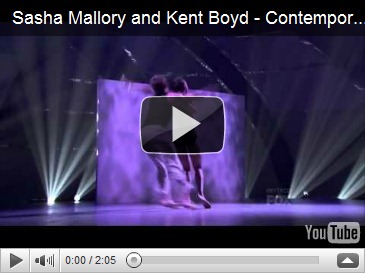
After seeing Sasha dance the 2nd routine of the night with All Star Kent – last year’s runner-up – the show was O-V-E-R for me. I was just absolutely….done! This dance was all about two people and the wall their relationship has hit and all the emotions they feel as they’re fighting to get to the other side of that wall. Tyce Diorio, the choreographer, is another one of my favorites and I just…I just love his work to pieces. I really really hope you enjoy this routine:
BUT! Another something-magical happened! The very last dance of the night featured contestants Caitlyn and Marko and WOW! If you remember, the song, “Heavy In Your Arms” was one of the Songs of the Week here on the blog. The interpretation of that song here was AMAZING!! Here’s the premise: Marko is an over-bearing, controlling man and Caitlyn is trying to escape him so she can find her own voice. I’ll let their dance tell you the rest:


4) “Things I Never Considered About Being a Writer” by Lisa Gail Green on Paranormal Point of View. Learning from other writers is one of the many things I LOVE to do and Lisa’s post hits all the other highlights of why I enjoy being a writer (other than the magic of writing). Everyone is so open and willing to share their knowledge: my family and friends are behind me 100%, I welcome constructive criticism and/or rejections and strive to learn from them, and the people I’ve met and connected with are absolutely amazing at what they do.  I’m proud to have been able to interact, learn from, and call them a ‘writer friend’. In regards to learning, there’s a similarity in writing and practicing yoga: you’re always learning, always a student. You may be able to teach others about a few things along the way, but there’s always room for us as writers to grow and learn from one another.  

3) ”The Flaw in JKR’s (Brilliant) Plan” by S.P. Sipal at Harry Potter for Writers. So….I guess there’s hope for me? LOL! Seriously though, when it comes down to it, I agree with Susan here: “…noting these mistakes JKR made gives me hope. It reminds me as a writer that I don’t have to be perfect (though that is no excuse to not strive for excellence). What is absolutely required, however, is to thrill my reader as JK Rowling did that these imperfections just make the work sparkle more brilliantly.” Nobody and no story is going to be perfect….but we sure can try and rest easy at the end of the day if it isn’t. Don’t you agree??

2) “The First Sentence as an Amuse-Bouche” by Therese Walsh on Writer Unboxed. We’ve all experienced and dealt with the pressure of trying to come up with that amazing first sentence. One that’ll hook the reader from the get-go and never let them go. But, unfortunately, sometimes we stare at a blank page and watch the cursor while we try to think of how to start our next WIP. My advice? Scrap thinking about how you’re going to start the next project. Just start it! Once you’ve reached the end, that perfect first sentence will come to you and hint at the fabulous character arc the reader is about to experience. The first sentence of my WIP didn’t come to me until the moment I typed The End: “Today was the day I wish I had the immortal gifts of my characters.” <—Is it making you go ‘hmmmm’?

1) “Meta-Emotion: How We Feel About Feelings, and How it Can Affect Our Writing” by Sarah Fine on The Strangest Situation. This post was a wonderful insight into how we as writers feel about feelings and how it leaps into our writing. This is one of the many reasons why I feel like I have to become my characters when I’m writing them. I’m pulled into their minds and feelings, leaving my own on the door step as I take a walk in their shoes for a day and witness a vastly different set of emotions and thoughts. If I didn’t, there would be a whole lotta author intrusion going on and that’s just not attractive. No one feels the same way or handles situations the same way I do. Not my family, not the reader, and most certainly not my characters. This post reminded me of that.

**Bonus Link!!**
Here’s a little humor to start your weekend off with. It’s a ‘Public Service Announcement’ that gave me a fit of giggles while I was reading it though mostly that was because I was nodding my head as I read through most of Patti’s signals of the condition.
I’m on the road to recovery. :0)

Here are a few updates to go along with this week’s favs:
Off the Blog: Overall, this was actually a great week! On Monday, I went back to work (after a 7 work-day vacation) and I wasn’t nearly as overwhelmed by emails like I thought I would be. I’m still behind on a few things, but they’ll get done sooner rather than later. I even started my new ‘Finding the Balance’ schedule and so far, so good there!
On the Blog: It was an awesome week for writing. I had a hard time picking a ‘Top Ten' – or top nine if you remove a space for a SYTYCD clip. I even had a stroke of inspiration this week and wrote a post on writing with multiple POV’s. I’m crossing my fingers that this will happen again over the weekend so I’ll be all set on posts next week! :0)

Hope everyone has a wonderful weekend!!

Happy Reading & Writing!
Melinda

Thursday, August 4, 2011

Whose Line?!? Using Multiple Points of View in Your Writing

Remember the improve comedy TV show ‘Whose Line Is It Anyway?’? Well, Colin, Ryan, Wayne and Drew popped into my head recently as I moved from one POV in my MS to another during the editing process.
whose_line_is_it_anyway-show
Picture Courtesy of ShareTV.com
We’ve seen, read and experienced POV shifts in novels, but when it comes to actually writing those shifts, we sometimes find ourselves a little worried about whether or not those shifts of POV are working. Personally, my MS shifts between first-person POV – told from my protagonist’s POV for about 85% of the story – to third-person POV – as a way to both help move the plot forward (since there are some fairly major steps taken by characters other than the MC) and help the reader along in understanding the ‘supporting cast’ of the story. I know, I know….shifting from first to third must be ‘handled with care’ and while it’s great in theory, it doesn’t necessarily work. But that’ll be for my beta readers to decide. Any takers? J If I need to re-write everything in third, then that’s what I’ll do. *Side note: the last novel I read that shifts from first to third – very sparingly – and handled it beautifully was ‘A Discovery of Witches’ by Deborah Harkness. I highly recommend this book to everyone I meet.
 
So what is ‘handling with care’ when it comes to POV shifts?
 
  • White space and astericks are your best friend!Chapter or scene breaks are my personal go-to device when it comes to moving the focus from the MC to another character. Normally when we see POV shifts, we’re also experiencing scene changes (There are rare situations where two POV’s are told for the same scene, but let’s just stick with the basics today), so naturally a scene or chapter break is going to be used. White space and/or asterisks are your best friend when breaking and/or shifting! I hate reading and enjoying a scene when out of nowhere, without warning, the next sentence starts another scene entirely from a different character’s POV and you’re left standing in the middle of a dark hall thinking “Um….what just happened here??”. Having white space or asterisks lets the reader know you’re about to take a right turn at the next corner…gives them a map, so to speak.
 
  • Let the story/characters decide ‘Whose Line’. In my case, I have a first-person protagonist, so any scene that entails both her and multiple characters is going to be told from her POV. But if you’re writing in third and you’ve come to a point where two or more of your characters have found themselves together in a scene, let the story and/or characters decide who’s going to narrate. Maybe the MC should? Maybe the most opinionated of the crew should? Let them decide and follow your gut on this one. The worst that can happen is it doesn’t work like it should so you search for another character/angle to tell the scene from then re-write. We’re writers….this is what we do best! :0)
 
  • Find the unique voice in each POV you’re writing. Let me ask you a question: How would you feel if all of your friends, colleagues, family, or critique partners had the same voice as you?? You’d get a little bored with your day to day conversations wouldn’t you? So will the reader. If every character they’re following sees the world the same, reacts the same, feels the same, etc. then you will have lost your reader. Sometimes you’ll lose them before they really get a chance to dive into the heart of your story. Use your friends, family and colleagues as inspiration. Don’t be afraid to ask them how they see the world or how they might react and/or feel about a particular action or problem. Just keep in mind that you’ll be doing that for research so any heated debates and/or arguments you subsequently enter into cannot be blamed on me. :0)
 
  • The protagonist rules all! Create a chain of command when it comes to your storytellers. Start with your protagonist as the ‘Colonel’. As such, 80-90% of the story is going to be told by them. With the rest of your characters, a.k.a. the ‘Soldiers’, be selective in deciding who’s going to be the best at storytelling and moving the story along. Then decide on what % of page time they can actually have. Too many storytellers are extremely annoying, especially when the story is supposed to be about one character’s journey, yet it’s being told by too many other people with too many opinions. One of the ways I’ve seen this done successfully is by Jodi Piccoult, as her stories are told by many first-person narrators and I personally believe she is one of the exceptions to this rule. Just as Soldiers should report to their Colonel and the Colonel report to the General, supporting characters should follow the lead and allow your MC to take charge in reporting the story to the reader. Only when needed – and sparingly – should a Soldier report directly to the General.
 
  • There is strength in small numbers. When starting to write a story with multiple POV, it’s important to decide how many different POV’s your willing to allow. The higher the number, the higher the difficulty in keeping up with their individual voices, quirks, opinions, and actions. And not just for you, but your readers. Keep unnecessary voices out of your story…especially if their voice doesn’t help move the plot along. Even if they have an opinion relevant to your story, find another way to incorporate it -- a simple conversation with another character whose POV is being told will suffice.
 
These tips for handling multiple POV’s with care are only the tip of the iceberg. There are gobs and gobs of information out there on this topic alone. These are some of the personal tips that I’ve put together based on my own writing experience.
 
What about you? Do you enjoy reading and/or writing multiple POV’s? If so, what do you find most attractive about this style of writing? Do you have any tips on writing multiple POV’s you’d like to share? Have you read any books lately that have shifted POV’s so seamlessly that the story was enjoyable?

Friday, July 29, 2011

This Week In Favs……….

10) “Critiquely Interview with The Rejectionist” from Mary Baader Kaley on Mary Baader Kaley (is) Not an Editor. Aahh…. an interview with one of my favorite blogs to follow: The Rejectionist. This is one interview that I thoroughly enjoyed reading. It was refreshing, open, honest, and gave me the warm tingles. My hope it that you enjoy this interview as well. And……

Here’s a little treat from The Rejectionist’s website that I found this week - A Harry Potter themed want ad: 


9) “There Is No Such Thing as Writer’s Block” by Joseph Selby, guest blogger on Roni Loren’s writing blog, Fiction Groupie (who was also interviewed by Mary Baader Kaley…check out her interview here). I loved this post! Especially the Neverending Story references he uses (I’ve definitely felt like my WIP was consumed by the Nothing a time or two). Writer’s block is the one excuse that I’ve consistently tried to wipe from my vocabulary. Nowhere can I have the word ‘writer’ followed by ‘block’. For me, 40% of the time outside stressors are what’s blocking my Muse from coming through. The other 60%? Somewhere along the way (a consequence of being 90% pantser) I’ve either missed a secondary plot element, forgotten about a character, or mishandled a delicate scene. All of these are reasons for my subconscious to tell my conscious that I need to go back and fix it immediately!

8) “Should Books Have a Rating System?” by Jami Gold. This is one of those posts that you keep going back to so you can read the thoughts and comments of other readers. Should books have a rating system? In my humble opinion: absolutely. It keeps readers from being blind-sided by sensitive topics (such as rape, abuse, etc.) and offers the parents of MG & YA readers a cushion so they have a better idea of what their children are reading without having to read them first. I don’t have children, and I’m already so busy, I barely have time to eat. Parents with pre-teens and/or teens in the household? Busier!! Besides, a rating system could also prove useful for us as writers. *ahem* “Who’s more likely to give a book a bad review or start a book banning campaign? Those who knew the content going in, or those who were blind-sided?” <—Excellent question, Jami! I encourage everyone to get over there and share your thoughts on the subject.

7) “Turn It Off'” by Barbara O’Neal on Writer Unboxed. *snort* Ooookay…. this has been a long-time comin’ for me! My biggest issue when I’m sitting at the computer trying to edit? The INTERNET! I don’t know if it’s ADD (I’m gonna call it like it is since, ‘our concentration is becoming fragmented by our attachment to electronics’, is putting it a little too nicely for me personally), or if I just subconsciously look to the internet world for inspiration when I’m stuck on a scene. Whatever it is, it is NOT good! It’s waaaaay to easy to get stuck on Twitter, Facebook or blog-surfing. The next thing you know, it’s an hour later, and you’ve wasted a damn good 60 minutes that could’ve been used finishing those chapter edits. I’ve printed Barbara’s suggestions and now have them posted on my wall. I’ll let you know how it’s going in a few days. ;)

6) “Breaking Down Writing – The How and Why?” by Tina Moss. Tina’s on vacay for the next two weeks, recharging her batteries and *hopefully* soaking up some sun. While she’s away, I’m enjoying her list of suggestions on writing methods. I’m 100% with her on #2: Write every day, and #5: If you tell your friends and families that you’re a writer, then you have to act like one.
Tina’s post is quite timely as I’ve been scheming a lil’ something for a week in August on the blog: The Writing Process. My ultimate goal? Guest bloggers for an entire week, sharing *their* writing process and personal writing tips. Maybe it’ll be Q&A, maybe it’ll be free form. I haven’t decided yet, but some of my favorite bloggers – and you know who you are – may be finding requests in their inboxes soon. *fingers crossed*

5) Another So You Think You Can Dance goodie!! :)
Melanie is the one to beat the season! Why, you ask? The dances I’m highlighting from this week both showcase her dance and interpretation of what the choreographers gave her <—That’s a true artist for you!

I could go on about how awesome she is, but I won’t. Instead, I give you the first performance from Wednesday night’s show that took my breath away….and it includes All Star Neil, one of my favs from seasons’ past (keep an eye out for Melanie’s HUGE ‘leap of faith’ into Neil’s arms).

Next up: Grrrl power! Sasha and Melanie teamed for a jazz routine by one of my all-time favorite choreographers, Sonya Tayek. I could write an entire blog post on Sonya alone (and what I wouldn’t give to spend one day with her)!


4) “Don’t Lose the Magic” by Lisa Gail Green on Paranormal Point of View. A-ha! When you’re beating yourself up over the difficulties of writing, gaining representation and publishing, Lisa comes through and reminds you not to forget the magic you discovered when you first picked up a pen – whether you were 7, 9, 14, 23, or 50 years old. There’s a reason why you started writing and it was called MAGIC.

Wanna see my reminder (thanks to Lisa’s wonderful reminder)? 

2011-07-28 22.35.07
 Can you tell I got a bit stuck editing today?!?

3) “Twisting and Deepening the Final Battle” by S.P. Sipal on Harry Potter for Writers. I LOVE these analyses from Susan. I couldn’t even begin to dive into the writing of JKR and pull the incredible lessons out of the writing the way she can. I mean….. I…… *sighs* Words seriously fail me right now. Susan: BRAVO on this post! I really really can’t wait for your next series – Mystery Plotting, is it?  :)

2) “What Drives a Story: Plot or Characters?” by Jami Gold. Yessss! Another awesome post that keeps me going back to read the comments. I love it when posts start a great debate between fellow writers. I’ll give you the ‘snapshop’ of the loooong comment I left on Jami’s blog: I tend to teeter in the ‘in between’ with reading, writing and movie-watching. I thoroughly enjoy the books and movies that tend to move a little slow (for other people) but offer the best character arcs of a lifetime. BUT, I also enjoy the flat-characters, blow-things-up, nothing-but-action movies and books that are so in your face, you seriously can’t look away. On the flip side, in my writing, I’ve got my characters and what I believe to be a very good plot developed, but both could use a little more oomph! For me, in a perfect world, every story would have that balance: an unforgettable plot AND unforgettable characters.

1) “Keeping the Faith: Best-Selling Authors Tell What Keeps Them Writing” on Writer Unboxed. To go along with Lisa’s post listed above (go figure I’d come across this within an hour of reading her post…when I should have been editing),  I wanted to share some inspiring words that were posted on Writer Unboxed this week. My favorite is from Dawn Tripp, author of Game of Secrets: “My heart broke for four years as I was writing Game of Secrets. That might seem a strange thing to say. It was a strange thing to feel. But it drove me. Writing is a dream of the body, not strictly of the mind, and even when I couldn’t quite see how the strands of the story would all come together, I somehow knew heartbreak was a feeling I could trust.” <—this quote was pulled from her interview on Psychology Today. One word: WOW! Hope you enjoy reading their inspiring words!

Now I’m off to get some more editing done! Today is my last 'official' vacation day from work – aka: time away from work to write/edit – which means that come Monday, I’m going to be right back in the office, overwhelmed with emails, phone calls and who knows what else! After the end of August, I won't have be able to take anymore time off until January.

**But I wouldn’t change it for the world!**


Happy Reading & Writing!!!

Melinda
Related Posts Plugin for WordPress, Blogger...